Henry James in his book, Italian Hours, described Venice’s outlying Torcello island as a “case of unheeded collapse” yet “enchantment lurks in it”. My husband and I went on a half-day tour to explore the outlying islands of Murano, Burano and Torcello on the Venetian lagoon. We found it was everything Mr. James described along with some pleasant surprises.
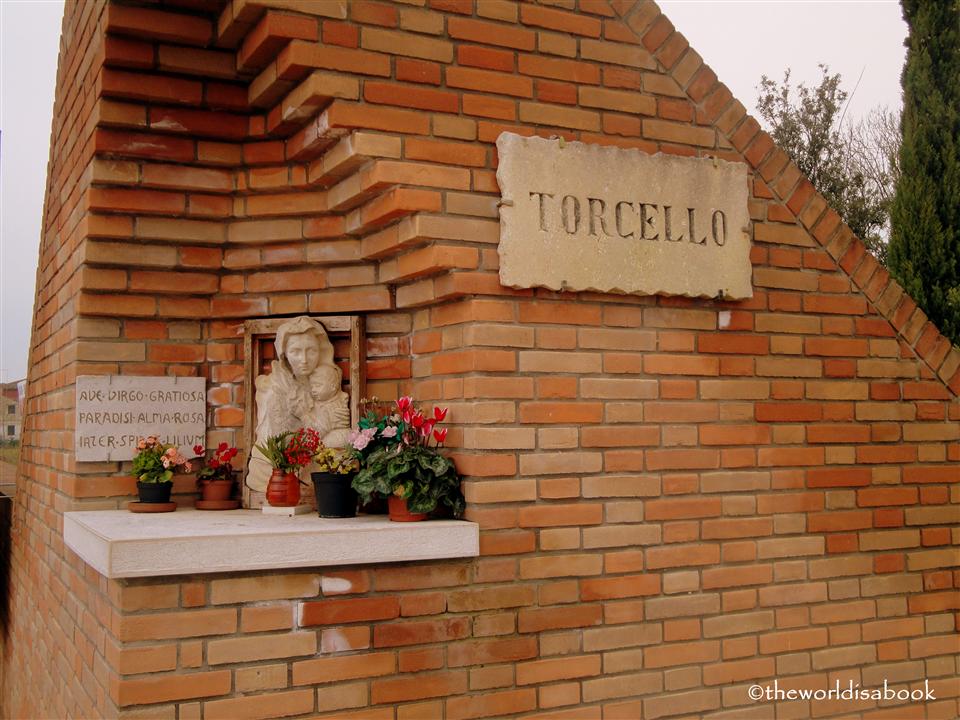
History of Torcello
Torcello became a settlement in the 5th century AD and was a refuge for the Roman city of Altino’s residents trying to escape barbarians. The bishop moved his seat to Torcello and churches and convents followed.
Its location led it to become a thriving trade center. In the 14th century, its population peaked at 20,000 with the city’s churches and palaces rivaling Venice.
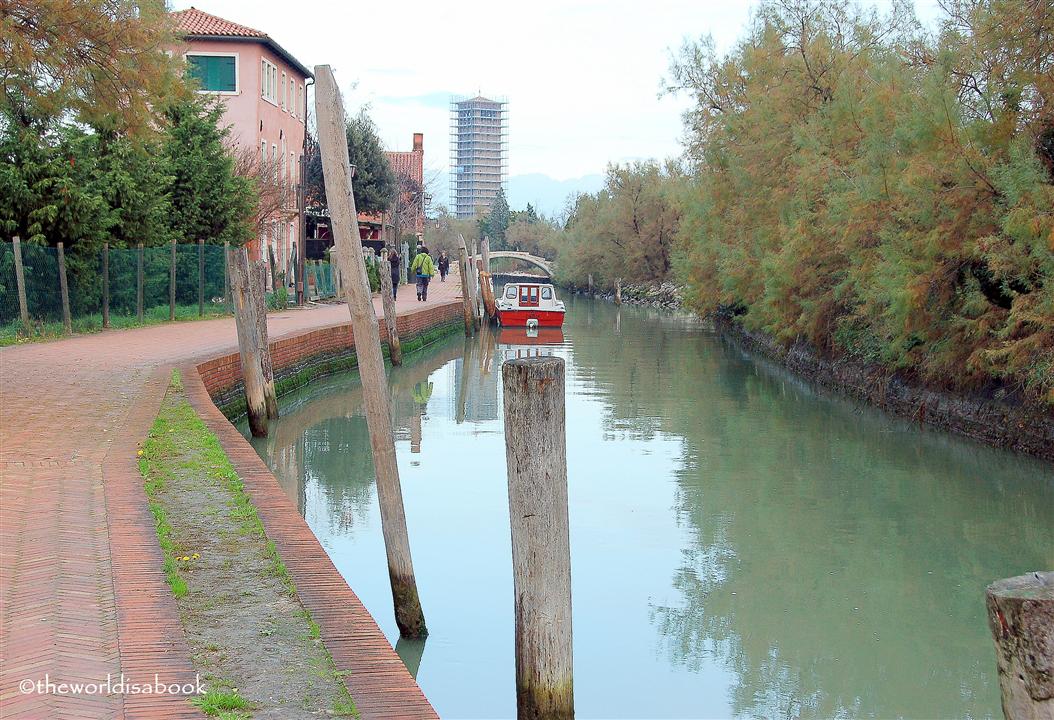
Over the years, Torcello’s canals began to fill up with silt (fine sand and clay particles) from mainland rivers and were unable to accommodate boats. The trade center slowly moved to Venice instead.
The canals’ shallow waters led to a malaria outbreak that took a toll on its remaining population. Survivors packed up for Venice, took down buildings and brought what materials they could salvage to their new location.
In many ways, Torcello gave birth to Venice. Torcello never recovered and much of it is now a nature reserve with a few dozen residents (can vary by source).
First Impressions of Torcello
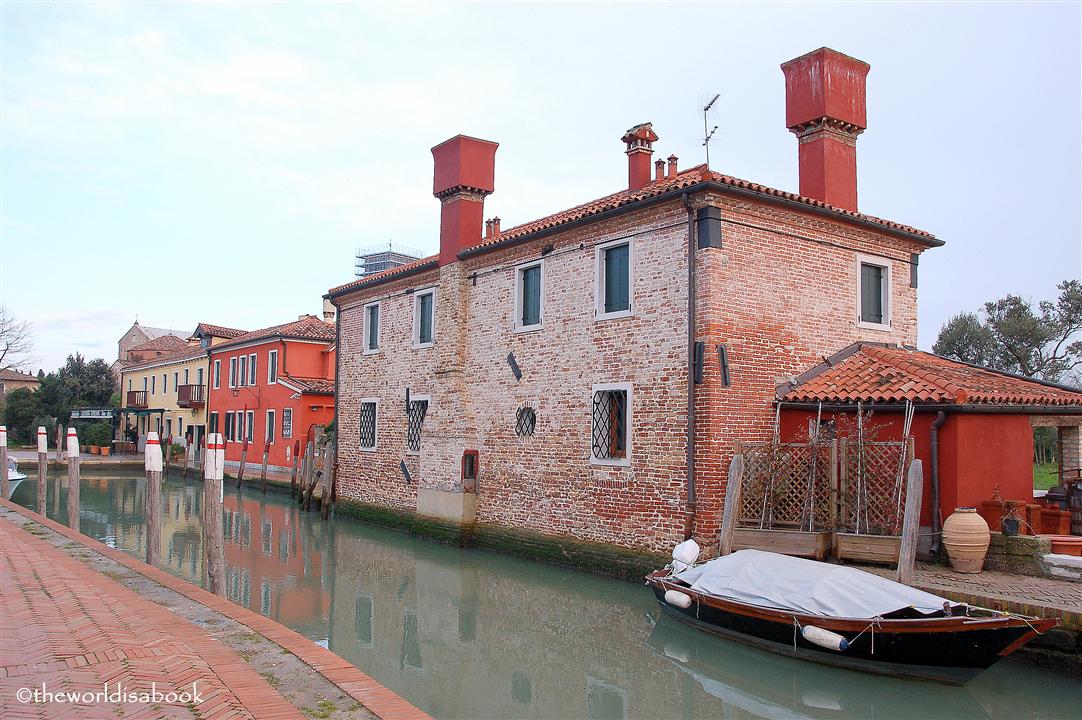
Our vaporetto docked on the island and the only sounds we heard were birds and the sound of the engine shutting off. It seemed like we were the only tourists on the island on this late November visit.
Dilapidated looking structures, with peeling paint, revealed small glimpses of their once vibrant colors. They lined the lone, paved walkway alongside the canal.
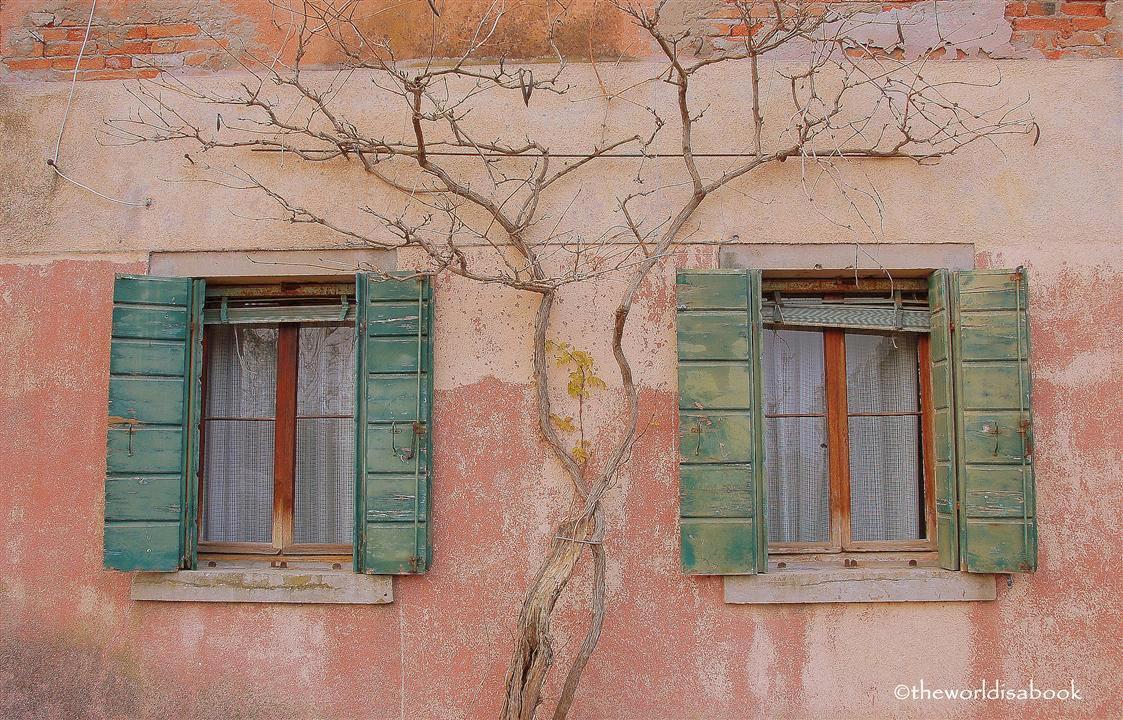
It was so eerily quiet and felt so isolated. We felt like we stepped back in time. It was hard to imagine how it used to look with busy activities along the canal and these houses swarming with people.
There was a sense of melancholy in these buildings. We actually saw more stray cats roaming around than residents. I don’t know how we ended up not having a single cat picture.
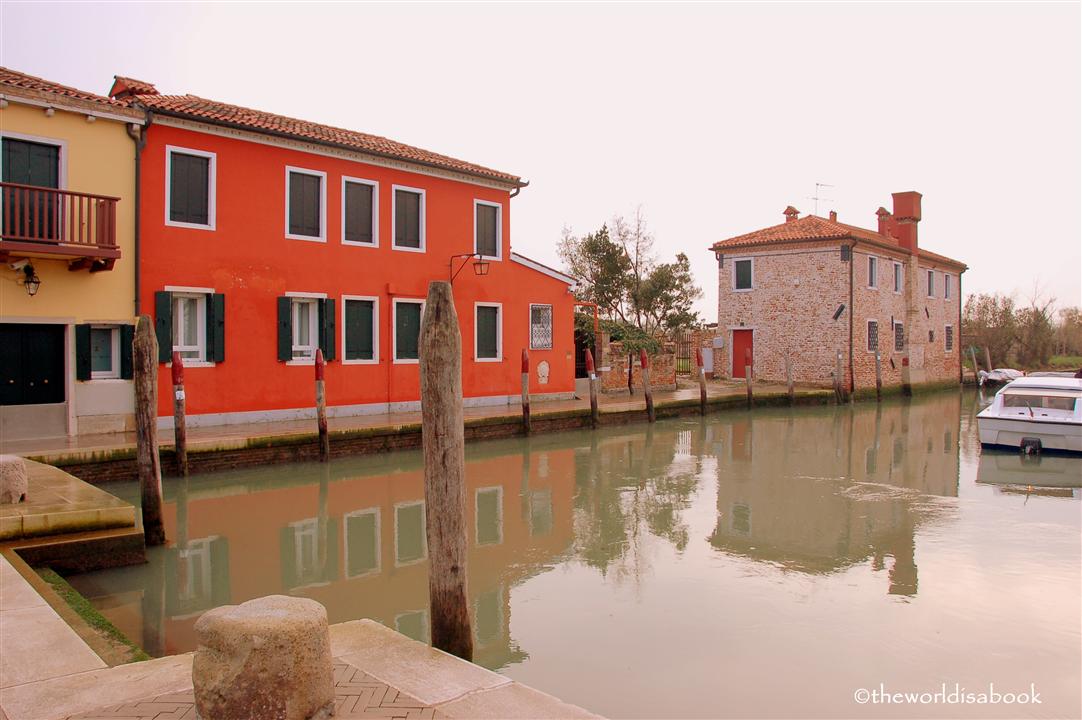
Things to see and do in Torcello Island
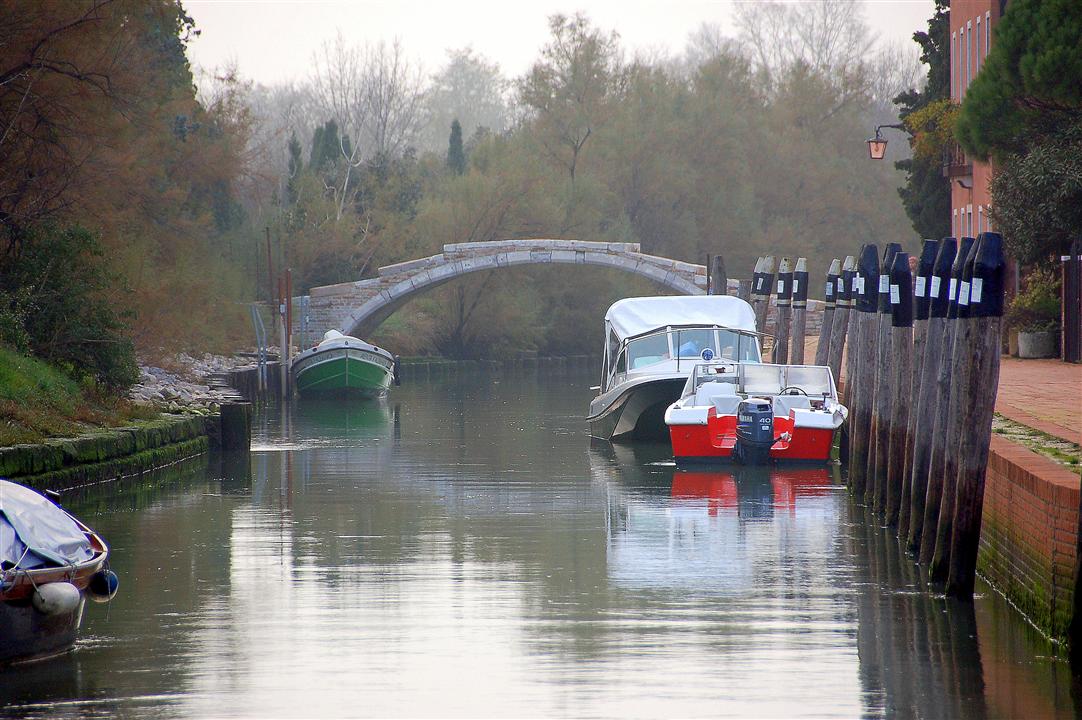
We came across a stoned arch bridge called Ponte del Diavolo or Devil’s Bridge. They built the bridge in the 15th century but restored it in 2009.
There were varying accounts of its name ranging from it being after a local family (Diavoli) or to an Italian legend that the bridge was built in exchange for souls. It’s one of the few bridges in the lagoon without a lateral support and like ancient times – no railings. This linked Torcello’s residential area to its farmlands.
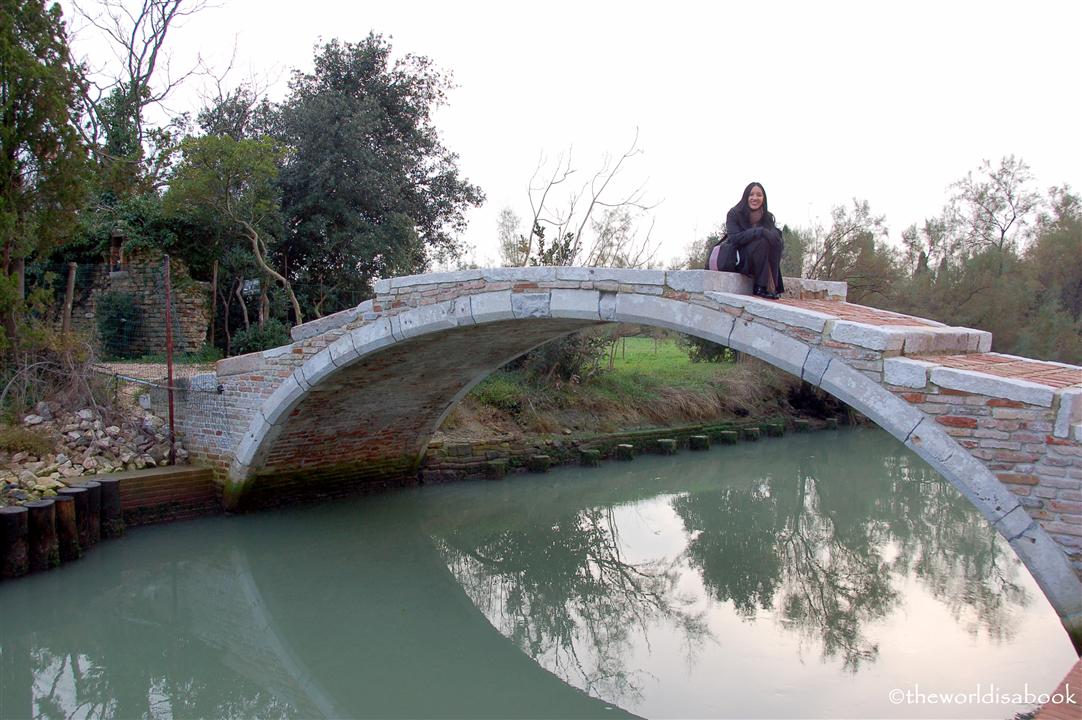
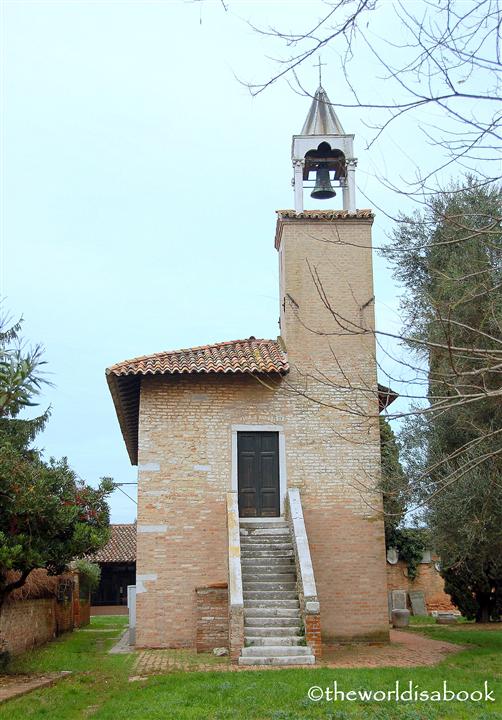
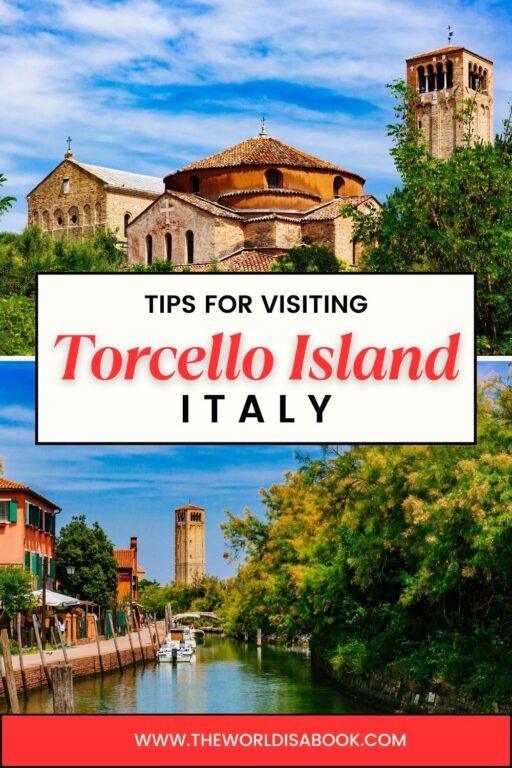
The short walk led us to Torcello’s main tourist attractions. From a distance, the square-shaped bell tower or campanile was visible but closed during renovations. The small plaza was home to two churches that have withstood the ravages of weather and time.
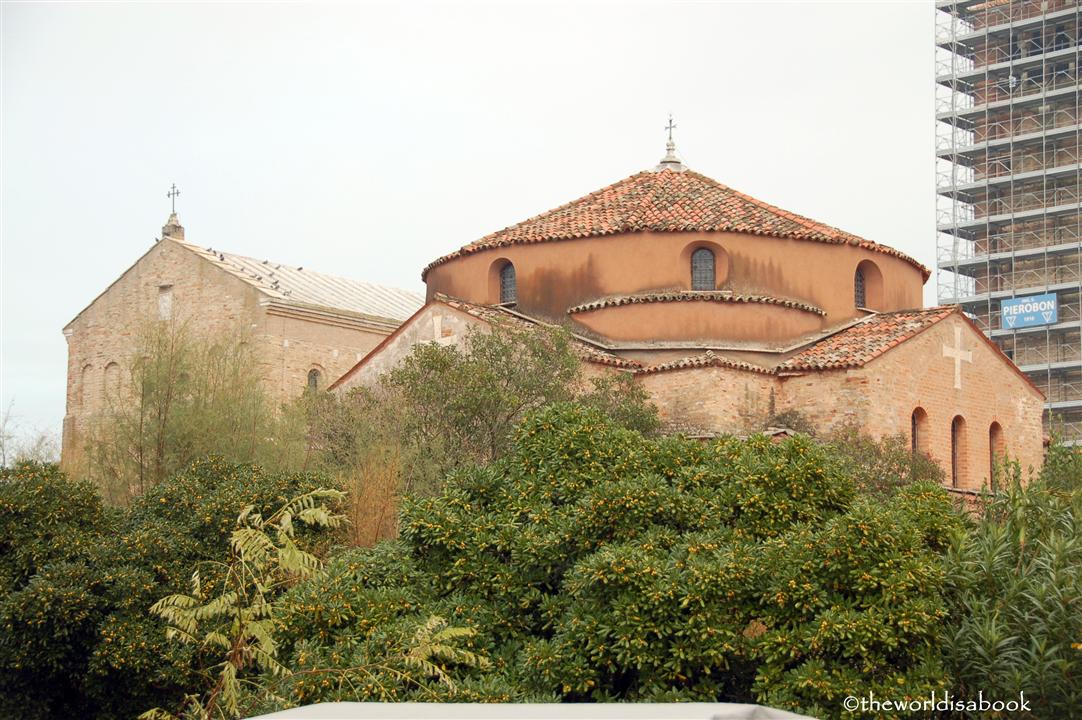
The Basilica of Santa Maria Assunta, founded in 639 AD and last rebuilt in 1008 AD, stands as the oldest monumental building in the Venetian lagoon. Dedicated to the Virgin Mary, it earned the title of Venice’s first cathedral.
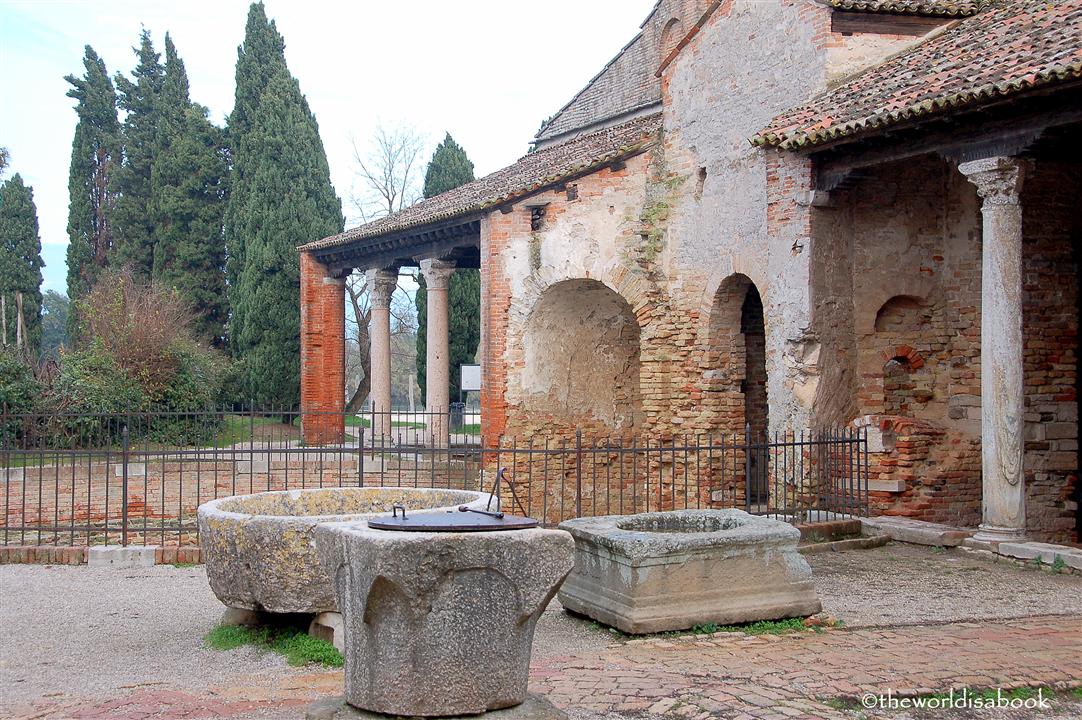
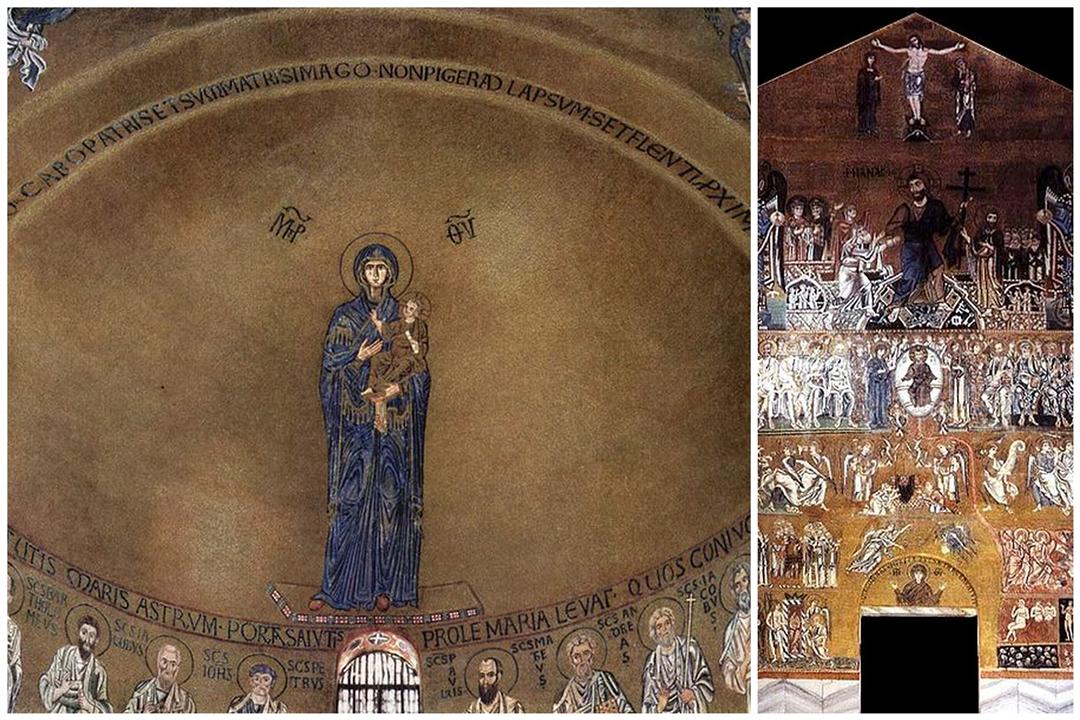
Don’t let its simple, rough-looking facade fool you. This church housed some fine collection of Byzantine wall mosaics from the 11th century.
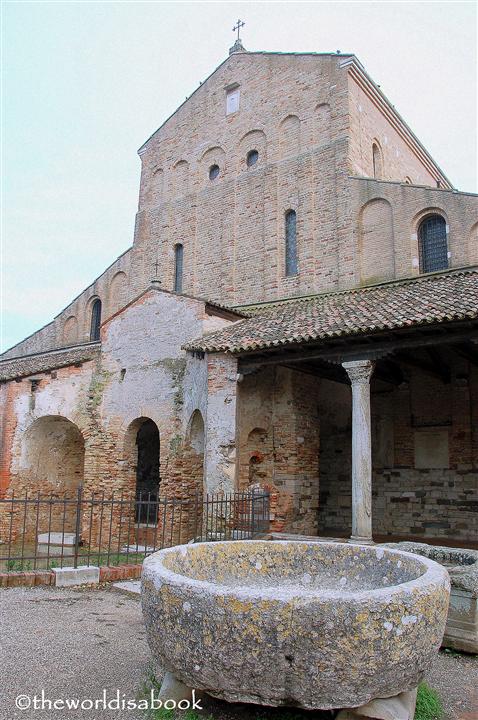
Unfortunately, the basilica was closed during our visit. Its interior included marble columns, mosaic floors and a treasure trove of impressive and intricate Byzantine-Roman mosaics. These mosaics included the Last Judgment and the Madonna and child, with an imposing mosaic said to cover one wall.
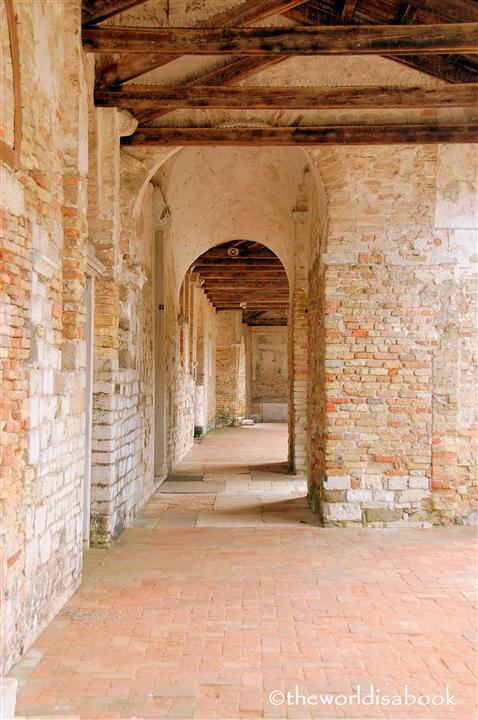
We’d gladly go back just to see these masterpieces.
The octagonal building of the Church of Santa Fosca was constructed between the 11th and 12th centuries, making it slightly newer than its neighbor. Its purpose was to house the body of a virgin martyr, St. Fosca from Ravenna. Her remains are still kept under the altar.
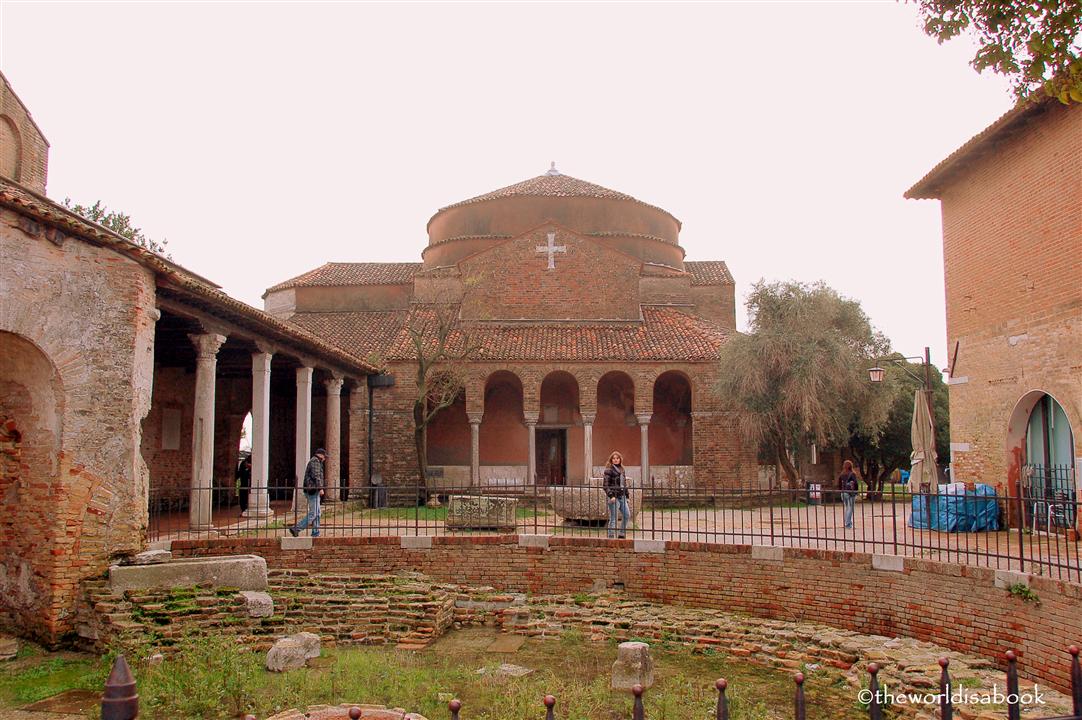
They designed the church as a Greek cross style (arms of equal length), with three apses or semi-domes. From what I’ve read, its interior was a bit more simplistic than the basilica next door.
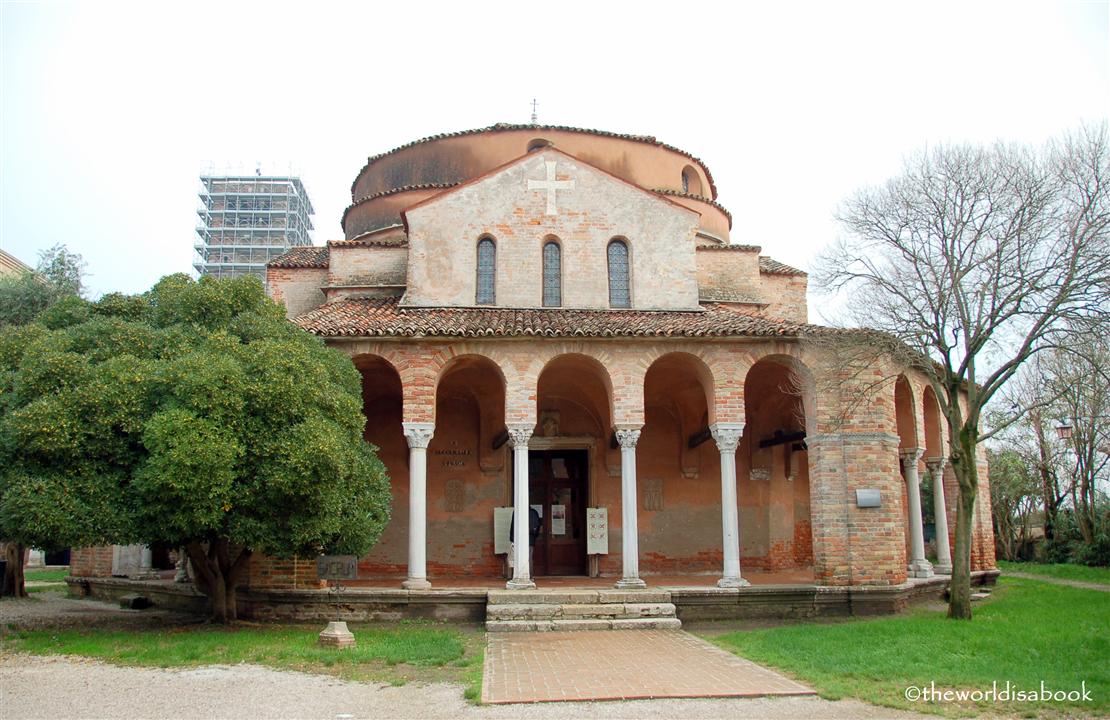
Statues and Sculptures
Off to the side of the plaza were the Pallazo del Consiglio or Council Palace which was the local government’s seat during the 14th century and the Archives Palace. This is now a museum that houses a collection of various church fragments that once stood in Torcello and some Byzantine objects and many of the island’s artifacts.
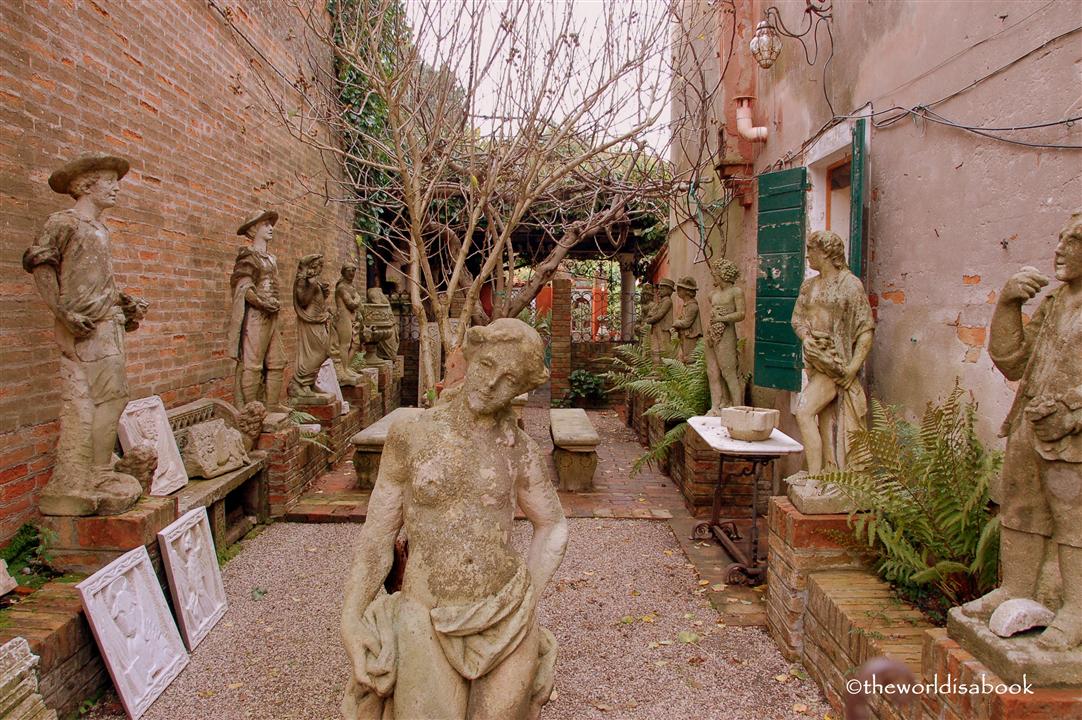
We came across this courtyard full of statues and sculptures. We weren’t quite sure if this was their resting place or a temporary home.
Their placements and overall feeling of abandonment almost felt like walking into Medusa’s garden. Remember the Greek mythology creature who turned people into stone once they caught sight of her?
As a former refuge to its original residents, Torcello has once again served as a haven for visitors looking for some serenity and trying to escape the throngs of tourists in Venice.
Over the years, Torcello’s famous inn – the Locanda Cipriani – have welcomed distinguished royalties and celebrities. Ernest Hemingway sought solitude here to write “Across the River and Into The Trees“.
We spent a little over an hour on the island since many things were closed. There wasn’t even a tourist vendor in sight but one kiosk selling beverages and snacks.
Granted, it was late November so it was far from tourist season. We do recommend the three island tour to see the interesting differences among them and see their stark contrast to Venice. You’ll never know what fascinating things you’ll discover and learn on these islands.
*Have you visited Torcello or the Venetian lagoon’s other islands? Does Torcello’s isolation appeal to you?
Pin it for later!
This looks so interesting! The last time I was in Venice was 1973 and
I’m pretty sure I didn’t go to this island. I want to get back to
Italy, this will be on my list.
Wow Nancie, you are way overdue for a visit to Italy. You’d have a field day taking pictures in Torcello.
So picturesque, so Venetian! Love the photo of the two windows!
Thanks Sophie! That window shot is also one of my favorites. It was definitely very picturesque and in a more subdued way.
I would love to visit Venice someday and I would definitely take your advice to visit these islands. This one, in particular, seems so peaceful. It’s nice to be able to enjoy a place and take photos without hundreds of other people crowding you.
You would love Venice and these outer islands, Lisa. It looks like it is always peaceful here but it was heightened when we visited because it was in Nov. It was really nice to have shots without people there – such a welcome change from Venice.
I would totally go to Torcello. I love the thought of a nature type sanctuary not far from Venice and a day away from the crowds sounds very pleasant. I also the colours of the fading peeling buildings. And I’d like some of those statues in the second to last picture for my garden.
That looks like just the kind of place I would love to explore. You did such a
good job of describing it, I felt like I was there.
What a romantic sweet little town- lovely photos!
Sounds fascinating! Despite the rough structures and peeling paint, Torcello looks surprisingly well taken care of for a place with only a handful of residents. I would love to explore and photograph it. Great post!
I’ve been to Venice a couple of times & always wondered what the other islands were like. Thanks for the virtual stroll …
Wow! The structures are amazing! Very Venetian indeed..Italy is one place that whoever visits will certainly fall in love with it.
Those photos are lovely!
I love the shutter picture (I tend to take photos of lots of shutters around the world!)
I’d also like to let you know that I’m hosting a 100 dollar accommodation voucher giveaway if you’re interested.
Thanks for the heads up! I was planning on seeing Murano and Burano the next time I go to Venice but now I’ll be sure to check out Torcello as well. Great photos!
Gorgeous photos! I have been to Murano, the glass-blowing island, and loved it. I’d love to tour all three of the islands someday.
Gorgeous photos of a lovely place. Sometimes it’s fun to be where the people are, but at other times, it’s nice to have the place all to yourself. There is a lot to appreciate about quiet, everyday things.
Torcello looks like a gem. Very interesting history about it, especially about all the people who moved from there to Venice. Nice selection of photos.
Very interesting! I have heard of Murano and Burano but never Torcello. This isle looks like a great find. I love the orange color!
Great photos…
Very beautiful and a little sad. Would love to see it though.
I’ve been to Venice countless times –just about 2.5 hrs drive from here– but have yet to make it to the surrounding islands. Some very nice shots here. :)
I spent five days in Venice back in 2001, but alas, never made it to this island.
I would love to see and experience Torcello. It seems such a loss that such a charming place was lost. I would enjoy seeing the kitties as well!
Al Ponte Del Diavolo is every bit as good food-wise as Cipriani, minus the view. Slightly better value, in my opinion. relaxed garden seating.
Some great photos here. I love Torcello – I’ve visited it a couple of times and it
always makes my historian’s heart happy!
Gorgeous – I so love discovering all these new places you teach as about – you have such a way of describing them, as if I am there!!!
Thanks for linking up this week!
I love the quiet outlying islands of Venice. I’ve been to a few, but not Torcello. Looks like my style though – quiet, romantic, and uncrowed.
How beautiful! I’ve missed out on Torcello when I’ve been to Venice. I love how quiet and still everything looks.
We caught a local ferry once and took ourselves on an independent tour of Burano. We will be in Venice this fall and will have to head out to this island – it looks like our kind of place. Thanks for the information.
I’ve never been to Torcello (or Italy, or Europe for that matter) but I certainly feel as though I have after reading your vivid description and accompanying photos. It looks and sounds lovely and I’ ve always wanted to ride a canal boat. Who knows, maybe one day, huh?
I have not been to Torcello but have heard lots about it (especially because of my interested in history and architecture). I will definitely make it there next time. You have some beautiful shots in this post!
Italy is one of my dream countries that i want to visit someday and i hope that i could visit this beautiful place. Thanks for sharing those stunning photos with us.
What a beautiful scene! This island is amazingly beautiful. I can’t wait to see and visit this place. It’s like picture perfect!
Your post and photos brought me right back to Torcello. It’s amazing how such a tranquil place exists so close to the bustling piazzas and canals of the Venice most people see! Thanks for sharing!
Mary, there are perfect pictures of this mysterious place! Thank you! and I`m looking for the image of the statue that is found in the Church of Santa Fosca – lefter the main entrance and behind columns…Maybe you have such a picture? Please write…
Thank you Galina! I just looked through my pictures and unfortunately, I couldn’t find any pictures of the statue. Sorry I hope you find what you’re looking for.
We were on Torcello in 2010 – lovely place, and just as you describe, so peaceful. I am typing up my handwritten diaries, and made a note to myself to research the saints/martyrs whose bodies are preserved in the ancient basilica. I gather now there are several, but there were two particularly small bodies. Do you have any information on these? (I should have paid more attention at the time, of course, but …
Love your pics.
Regards,
Judy.
Thanks Judy! I’m sorry but the basilica was closed during our visit to Torcello which was a big disappointment. Hopefully we can both return soon to find out for sure :)
Beautiful post, I think that this destination out of usual track is a good choice.
P.S. a little note, there is a misspelling in the post, Palazzo del consiglio and not
Pallazo. :-)